



Material quality affects the quality of construction work in a project. Thus all materials should be checked before using them in any structure. A complete compliance checklist can help minimize construction dangers, boost protection, and make sure that standards are met. METS Lab UK offers reliable testing solutions to support professional construction and material testing services for contractors, engineers and developers to help them make informed decisions.
Verify Material Certifications
Firstly, the product certifications should be checked prior to bringing materials to the jobsite. Consequently, compliance with the national and international standards can be verified. Before starting laboratory testing, it is essential that every reputable construction laboritory confirm that the documentation is correct.
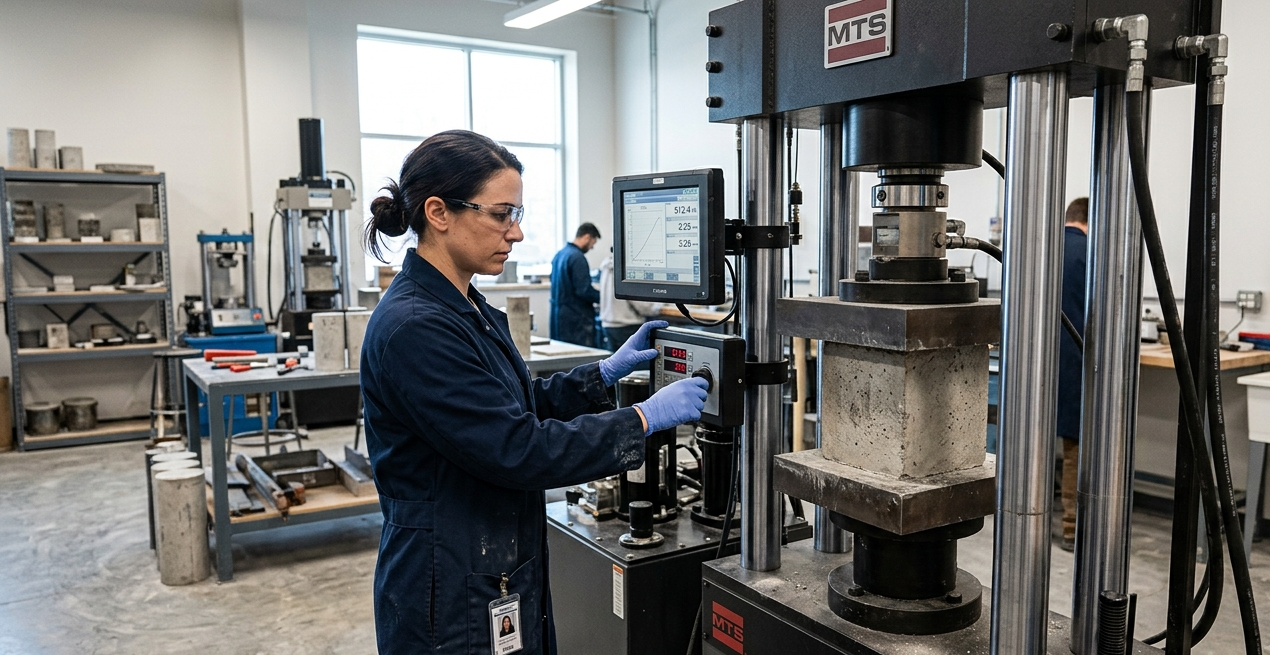
Test Material Strength
Furthermore, before construction, the strength (compressive strength, tensile strength and durability) should be assessed. Thus, weak or defective materials can be detected at an early stage. To ensure that only approved materials are used throughout the project, professional construction and material testing can be undertaken.
Check Chemical Composition
In addition, chemicals like cement, steel, aggregates etc. should be tested for chemical uniformity. Thus, structural failures that are not predicted due to the poor quality of the material can be reduced. Advanced testing is conducted in an experienced construction lab to validate material composition and performance.
Assess Environmental Resistance
Also, materials need to be tested to ensure they are moisture resistant, corrosion resistant and weather proof. This can help to enhance the long-term structural performance and minimize the future maintenance expenses. Robust building materials testing aids more secure and lasting building jobs.
Confirm Dimensional Accuracy
In addition, the dimensions and manufacturing tolerances should be checked prior to installation. Hence, the construction inaccuracies due to incorrect components can be avoided. Precise construction and testing of materials lead to an easier execution of projects and better control of quality.
Ensure proper test documentation
Also, laboratory reports and compliance certificates should be systematically documented. Thus, project approval, inspection and regulatory audits can be performed efficiently. A construction professional laboratory that offers certain documentation, which is reliable to support quality assurance processes.
Plan for Continuous Quality Assurance
Lastly, testing needs to be done not just prior to project beginning, but throughout various phases of construction. This means any quality deviations are easily detected and corrected immediately. A continuous building materials testing further enhances the reliability of the projects and adherence to the regulations.
Conclusion
Finally, construction quality is related to regular inspections, proper documentation and independent laboratory testing. Businesses can leverage expert construction testing and material testing by collaborating with METS Lab UK to ensure they have access to highly reliable construction laboratory services and also to in-depth building materials testing solutions. With this in mind, construction projects can benefit from greater safety standards, compliance with regulations, and long-term structural performance, while minimizing the risk of expensive issues and guaranteeing project success.