


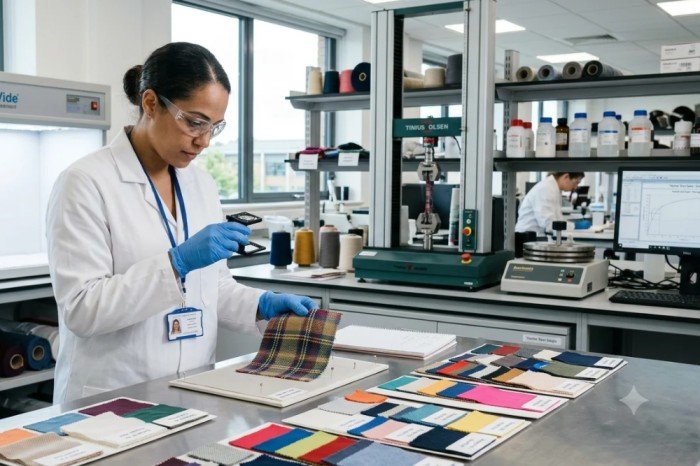
Quality of textiles is more than their appearance. The reliability of a product is affected by fabric strength, colour retention, abrasion resistance and chemical safety. Hence, Textiles and Fabric Testing contributes to the manufacturers to measure the material properties, detect the possible defects and determine whether or not their product has the required properties. Textile Performance Testing and Fabric Durability Testing enable companies to make well-informed choices on material selection and quality control. METS Laboratories UK provides textile testing services for businesses to help them determine product quality and performance.
What is the need to test textiles & fabric?
There are performance needs for various fabrics. For instance, clothing should be washable and upholstery should be able to handle repeated rubbing. Therefore, Textiles and Fabric Testing enables manufacturers to compare materials with suitable testing procedures and product standards.
Key benefits include:
- Quality control: Find material weaknesses that could affect products before they go to the market.
- Product reliability: Assess fabric characteristics for use.
- Chemical safety assessment: Research particular chemicals on specified requirements.
- Standards assessment: Provide support for assessment to the relevant industry standards.
- Improved material selection: Objective test results of fabrics.
- Essential Tests for Textile Products
1. Fabric Durability Testing
Fabric Durability Testing includes assessing material durability after repeated actions and mechanical stresses. These tests give the manufacturer knowledge of the strength of the fabric and its resistance to wear.
The following are the common testing methods:
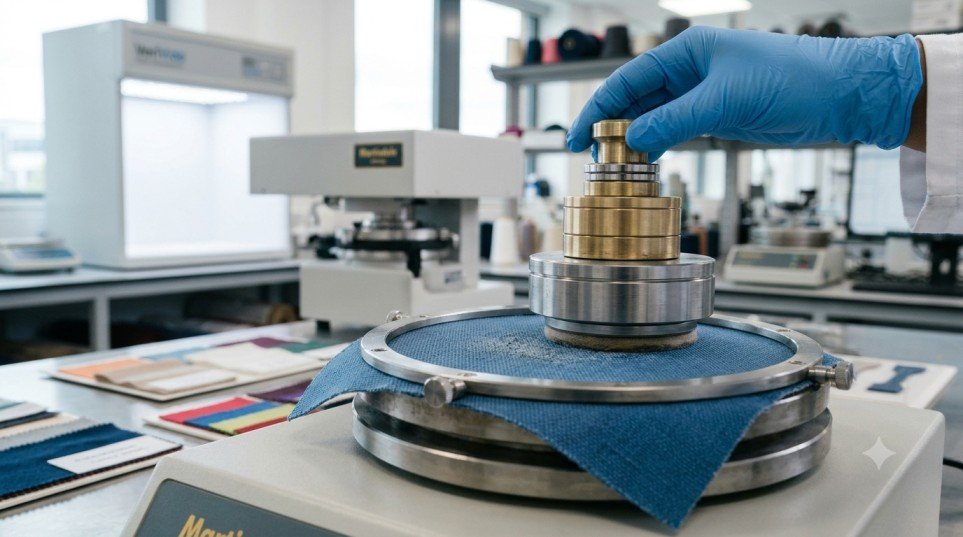
- Abrasion resistance: ISO 12947 provides guidelines for the testing of the resistance of textiles to abrasion by the Martindale method.
- Tensile strength: ASTM D5034 provides for the breaking force and elongation properties of textile fabrics by a grab test procedure.
- Textile tensile properties: BS EN ISO 13934: This standard specifies methods for determining the maximum force and elongation of textile fabrics.
- Pilling resistance: BS EN ISO 12945 is the standard relating to the assessment of pilling and fuzzing of the surface of fabrics.
Manufacturers can choose appropriate techniques to consider material properties and make informed product development decisions.
2. Textile Performance Testing
Textile Performance Testing determines the fabric properties which can affect the performance during use. These tests can be used to investigate the colour stability, surface wear and changes that occur due to washing or environmental exposure depending on the intended use.
Significant testing areas are:
- Colourfastness testing: ISO 105 series are tests used to assess colourfastness against such factors as washing and rubbing.
- Abrasion resistance: This is used to determine the resistance of fabric to rubbing during use.
- Pilling assessment: looks at the tendency of small fibres to ball up on the surface of the fabric.
- Colorfastness: Assesses the resistance of colour from fading.
These assessments aid in comparing different materials and can be used to determine which properties need further study.
3. Chemical Safety and Textile Standards
Protection against chemicals is one of the factors to consider when choosing fabrics for clothing, accessories and other textile products. As a result, Textiles and Fabric Testing can incorporate suitable chemical evaluations depending on the components of the product and the requirements of its destination market.
Relevant standards and regulatory frameworks:
- OEKO-TEX STANDARD 100: Certification system for textiles based on the testing of harmful substances based on the criteria for the appropriate textile group. Certification is not automatic based on testing.
- Restriction on the Use of Chemicals: EU legislation which applies to chemicals, including restrictions and requirements for substances used in textiles.
- GSO 1956: Has regard for harmful substances in textile and leather products and related accessories.
- SASO requirements: Textile products may be subject to Saudi technical requirements and conformity assessment requirements when they enter into the Saudi market.
Requirements vary according to product, materials, regulation and market. It is therefore important for businesses to establish which obligations are applicable and make an informed decision on their testing programme.
Selecting the appropriate Textile Testing Laboratory:
Choosing a suitable laboratory is essential for companies to receive relevant outcomes in order to meet their quality-control needs. Manufacturers should think about the following before arranging Textiles and Fabric Testing:
- Learner’s outcomes: Describe the processes that can be used in the product.
- Testing capabilities: Ensure that the necessary tests are performed.
- Tell about the cloth used and how it will be used.
- Destination market: Determine relevant requirements of the UK, Europe, Saudi Arabia or the Gulf.
- Reporting: Ensure results provide useful information for quality decisions.
METS Laboratories UK provides services for testing textiles, footwear and toys. It offers businesses the option to chat to its page Textiles, Footwear and Toys Testing Services to discuss their testing needs.
Conclusion
There is a need for proper material assessment and quality control to ensure reliable textile products. Textiles and Fabric Testing, with the assistance of Textile Performance Testing and Fabric Durability Testing, can be used to assess fabric properties and determine if there is any concern for fabrics of low quality. Additionally, if you know the standards, it will be easier for businesses to determine what testing and regulatory requirements are needed for their market. For companies that require textiles testing services for making informed decisions regarding the quality and performance of a product, METS Laboratories UK can come to the aid.