


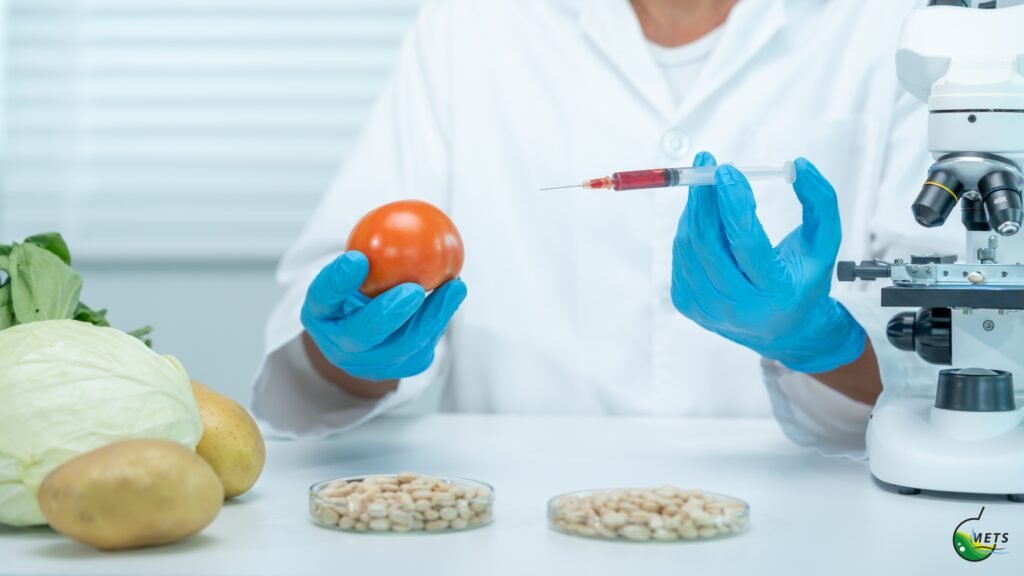
A crop can look healthy, pass a visual check at the farm gate and still carry traces of what was sprayed, spread or fed along the way. Pesticides protect crops from insects, weeds and fungus, and antibiotics can reach the food chain through treated animals, manure and compost. When too much is left behind, the result is pesticide antibiotic contamination that nobody can see, smell or taste.
At METS Laboratories UK, we provide agro product testing for farmers, manufacturers and distributors, including pesticide residue testing, so you can check what is in your grain, produce, feed and farm inputs before they reach a buyer or a plate.
Pesticide and Antibiotic Residues
Residues are small traces of a chemical that remain after it has done its job.
- Pesticide residues: traces of insecticides, herbicides and fungicides on or in crops, fruit, vegetables, grains and feed.
- Antibiotic residues: traces of antibiotics that pass from treated animals into manure and compost, and from there into soil and crops. Tetracyclines and sulphonamides are common examples.
- How they get there: spraying, spray drift, treatments on stored grain, soil that holds on to chemicals, and manure or compost used as fertiliser.
- How much is too much: residues are measured in tiny amounts, and legal limits called maximum residue levels (MRLs) set how much is allowed.
Importance of Pesticide Residue Testing
Pesticide antibiotic contamination cannot be judged by looking at a crop, so a laboratory result is the only way to know where a batch stands.
- Consumer safety: regular exposure to residues above the legal limits is a health concern, and young children are the most sensitive.
- Legal limits and market access: retailers, importers and processors reject batches that go over the limit, which means delays and lost sales.
- Antibiotic resistance: antibiotic residues in the food chain and in soil can help resistant bacteria survive.
- Soil and environment: some chemicals persist in soil and can reach water and wildlife.
- Organic and quality claims: results help show that inputs and produce meet organic or buyer requirements.
- Feed safety: residues in animal feed can pass on to livestock.
Which Agro Products Need Testing?
Residues can turn up anywhere in the agricultural supply chain, so agro product testing covers both what is grown and what is applied to it.
- Fresh fruit and vegetables: tested for pesticide residues alongside other quality and safety checks.
- Grains, legumes and pulses: corn, barley, wheat, rice, beans, chickpeas and lentils.
- Cash crops: cotton, tobacco, sugarcane and coffee beans.
- Animal feed: feed grains and supplements, where residues can reach animals.
- Organic inputs and fertilisers: compost, manure, biofertilisers and biostimulants, which can carry antibiotic residues.
 How Does Agro Product Testing for Residues Work?
The steps are broadly the same for most samples.
- Sampling: a small sample is taken that represents the whole batch, field or load.
- Preparation: the sample is blended until it is even, the residues are pulled out with a solvent, and material that could interfere is cleared away.
- Analysis: chromatographic methods, such as HPLC, separate the residues so each one can be identified and measured, often paired with mass spectrometry.
- Comparison: each result is checked against the relevant limit.
- Reporting: the findings are written up in a report.
Who Needs Pesticide Residue Testing?
Anyone who grows, makes, buys or sells agro products can use the results.
- Commercial farmers and crop specialists
- Manufacturers of fertilisers, compost and organic inputs
- Animal feed manufacturers
- Distributors, importers and exporters of grain and produce
- Organic producers who need to confirm their inputs
- Research institutions, universities and agtech companies
Why Choose METS Laboratories for Pesticide Residue Testing?
Residue work depends on the range of products you can test and the instruments behind the results. Here is what matters for this test.
- A wide range of agro products: produce, grains, legumes, cash crops and animal feed can all be tested in one place.
- Chromatography-based analysis: HPLC and other chromatographic methods separate and measure individual residues.
- Residues in context: contamination screening can sit alongside heavy metal and organic pollutant checks, so one sample gives a fuller picture.
- Quick analysis and technical support: agricultural scientists are on hand to help you read the results.
Conclusion
Pesticides and antibiotics do useful work on the farm, but what they leave behind has to stay within limits. Pesticide residue testing, together with antibiotic residue testing for feed, manure and compost, tells you whether a batch is safe to sell and gives you evidence to show a buyer. If you have crops, feed or farm inputs to check, send METS Laboratories UK the product details, the compounds you are worried about and any buyer specification, and our team will advise on how to submit your samples.
Frequently Asked Questions
1. What is a maximum residue level (MRL)?
Ans: An MRL is the highest amount of a pesticide or veterinary drug residue legally allowed in or on a food or feed. A batch over the limit can be rejected.
2. What is the difference between pesticide and antibiotic residues?
Ans: Pesticides are used to protect crops from pests, weeds and disease. Antibiotics are used in animals, and their residues usually reach crops through manure, compost or feed.
3. How do antibiotic residues get into crops?
Ans: Treated animals pass antibiotics out in manure. When that manure or compost is spread on fields, the residues can enter the soil and be taken up by plants.
4. Does washing remove pesticide residues?
Ans: Washing can remove some residues from the surface, but not those that have been absorbed into the plant. Testing is the only way to know the actual level.