


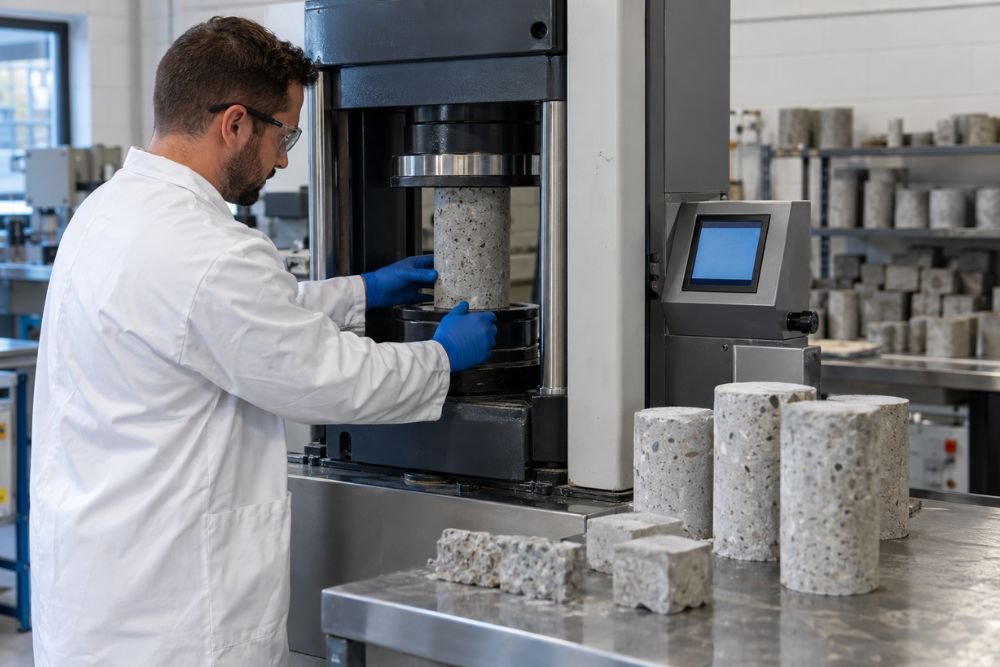
Building Material Testing UK is an important part of construction quality assurance, helping manufacturers, suppliers, contractors and developers verify whether materials meet the required performance and compliance criteria. From concrete and reinforcement steel to aggregates, timber, adhesives, sealants and polymer-based materials, appropriate testing provides evidence of strength, durability, safety and suitability for intended applications.
For businesses operating in the UK construction sector, professional Construction Material Testing can identify potential material weaknesses before products are incorporated into buildings, infrastructure or other projects. METS Laboratories UK provides construction material testing from its laboratory in Dudley, supporting material quality, performance and compliance across a range of applications.
Why Is Building Material Testing Important?
Construction materials are expected to maintain their required properties throughout their intended service life. Material performance can be affected by mechanical loading, environmental exposure, moisture, temperature and chemical conditions.
Testing can help businesses assess:
- Structural integrity and material strength
- Durability and long-term performance
- Physical and mechanical properties
- Chemical composition
- Material consistency and quality
- Compliance with applicable specifications and standards
For manufacturers and construction professionals, early identification of material weaknesses can help reduce the risk of failures, costly repairs and project delays. Testing can also support the development of more sustainable and efficient construction materials.
Key Standards for Construction Materials
The appropriate standard depends on the material being tested, its intended application and the property being evaluated. METS Laboratories UK lists a range of British, BS EN, ISO, EU and ASTM requirements within its construction-material testing services.
Concrete Testing
Concrete is fundamental to many construction projects, making consistent performance particularly important. METS references BS EN 206 for the specification and performance of concrete and BS EN 12390 for testing hardened concrete.
The BS EN 12390 series covers testing such as compressive strength, tensile strength and density. These assessments can provide important information about whether hardened concrete has the required properties for its intended application. METS also references BS 8500, which complements BS EN 206 and addresses concrete specification and constituent materials.
Aggregate Testing
Aggregates are widely used in concrete and other construction applications. Their physical and mechanical characteristics can influence the performance of the finished material.
METS lists the BS EN 932 series for aspects of aggregate testing and the BS EN 933 series for geometrical properties. Testing against the appropriate methods can help establish whether aggregates meet specified requirements for their intended use.
Steel and Metallic Material Testing
Reinforcement and other steel products require appropriate mechanical and material assessment. METS references BS EN 10080 for reinforcing steel and BS EN ISO 6892-1 for tensile testing of metallic materials at room temperature.
Depending on the product and testing requirement, assessments can include tensile properties, chemical composition and dimensional characteristics. METS also identifies BS 4449 in relation to steel for concrete reinforcement, including mechanical properties, chemical analysis, rib geometry and dimensional tolerances.
What Does Construction Material Testing Involve?
A testing programme should be selected according to the material and the performance characteristics that need to be established.
Mechanical testing can assess properties such as tensile strength, compressive strength, flexural performance, impact resistance and load-bearing capability.
Physical testing can examine characteristics such as density, specific gravity, water absorption and other material-specific properties.
Chemical and material analysis can help identify composition, material characteristics and potential impurities.
METS provides construction material testing in UK that includes metallographic and microscopic analysis, welding inspection, material identification, structural investigations, load bearing and fatigue testing, depending on the project requirements.
Plastic and Polymer Materials in Construction
Modern construction products can incorporate thermoplastics, thermosetting materials, rubber and elastomeric materials, synthetic and biopolymers, as well as GRE/GRP pipes. METS includes these material categories within its wider construction-material testing scope.
Where a construction product contains plastic or polymer materials, additional characterisation may be appropriate. METS’s dedicated polymer testing services include physical and mechanical testing such as density, water absorption, tensile strength, flexural strength, compressive strength, impact resistance and shear resistance.
The polymer-testing page specifically references BS EN ISO 527 for tensile properties, BS EN ISO 179 for impact testing and BS EN ISO 1133 for melt-flow testing. Construction-sector polymer testing is also described as being conducted in accordance with the UK Construction Products Regulation and relevant British Standards.
This makes polymer testing particularly relevant for construction products where material performance, durability or processing characteristics need to be established.
Building Material Compliance in the UK
Compliance is not based on applying one universal test to every construction material. The appropriate assessment depends on the product, its intended use and the applicable technical requirements.
METS states that its construction-material testing covers UK, BS EN, ISO, EU and ASTM requirements. Its website also discusses construction-product regulatory requirements, including performance information, conformity assessment and applicable marking considerations.
For manufacturers and suppliers, this means that identifying the correct testing route before assessment is essential. The material, product specification, intended application and required performance characteristics should all be considered when developing a testing programme.
Choosing a Building Materials Testing Laboratory UK
Selecting the right Building Materials Testing Laboratory UK can make a significant difference to the reliability and usefulness of test results.
Businesses should consider whether the laboratory can:
- Test the specific material or product category
- Apply appropriate British, BS EN, ISO or international methods
- Assess the properties relevant to the intended application
- Provide clear technical reporting
- Support product development and quality assurance
- Investigate material failures when required
METS Laboratories UK provides testing solutions covering concrete, cement products, steel and metals, wood and timber, aggregates, adhesives and sealants, sustainable building products, safety and fire-protection materials, polymers and other construction-related materials.
Construction Material Testing Services UK
Professional Construction Material Testing Services UK help businesses obtain objective evidence about the quality, performance and suitability of construction materials before they reach the market or are incorporated into projects.
From concrete and aggregates to reinforcement steel, polymers and specialist construction products, testing can support quality control, product development, compliance and failure investigation.
METS Laboratories UK, located in Dudley, UK, provides testing services designed around the material and the requirements of the project. By selecting relevant test methods and standards, businesses can make better-informed decisions about material quality, performance and construction suitability.
Conclusion
Reliable construction depends on materials that perform as expected. Building Material Testing in UK provides manufacturers, suppliers and construction professionals with valuable evidence about material strength, durability, composition and compliance.
Whether the requirement involves concrete, aggregates, steel, timber, adhesives, sealants or polymer-based construction products, the right testing approach should be determined by the material and its intended application. Working with an experienced laboratory can help businesses strengthen quality assurance and make informed decisions throughout the product lifecycle.