


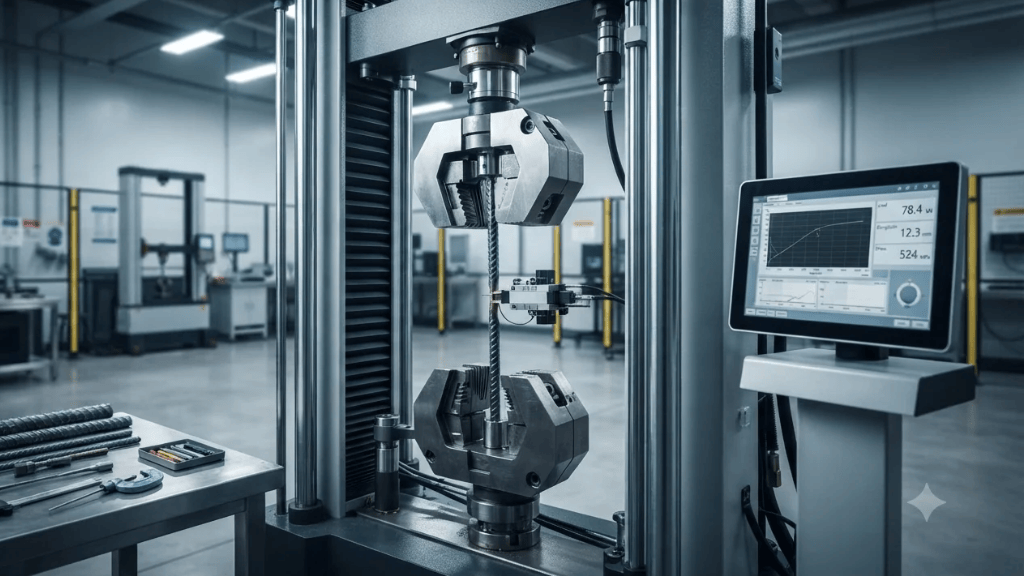
The materials used in all stages of construction projects are crucial in terms of their quality, strength and reliability. Whether concrete, steel, aggregates and soil or cement, every material has to meet the performance criteria specific to it before it is used on site. Construction and material testing aids companies discover potential issues, make sure that materials are suitable and decrease the danger of structural problems. Hence, it is crucial to perform the proper testing prior to construction to ensure safety, quality and longevity.
What’s the importance of Quality Checks in Construction?
If not the right materials are used or materials are used inconsistently, there are potential structural weaknesses, potential delay, and potential cost to repair the project. But when materials are systematically tested for buildings, construction professionals can make informed decisions before approving materials.
Key benefits include:
- Better structural reliability: Assesses the strength and performance of materials.
- Lowering project risks: Anticipates issues with materials before construction begins.
- More consistent quality control: Ensures uniformity between various batches of materials and suppliers.
- Ensures materials meet relevant specifications and testing requirements.
- As a result, proper material assessment contributes to safer structures and more dependable construction outcomes.
- There are certain quality checks that are crucial before utilizing any building material.
Various materials need different testing techniques. So, the checks should be chosen in regards to the type of material, use, and technical requirements pertinent to the project.
Test and specifications for concrete, cement.
Concrete and cement are an important part of the structural construction. Therefore, they should be evaluated in terms of their quality prior to their use.
Important checks include:
- Testing of concrete strength using compressive strength.
- Consistency and workability tests of fresh concrete.
- Fineness of cement, setting-time tests.
- Analysis of materials composition and suitability.
- These checks are to determine if materials are suitable for the desired construction application.
- Steel and Metal Testing.Steel and Metal Testing.
Steel is used extensively as reinforcement, framework and structural elements. But if there are differences in its properties, then it can impact the structural performance.
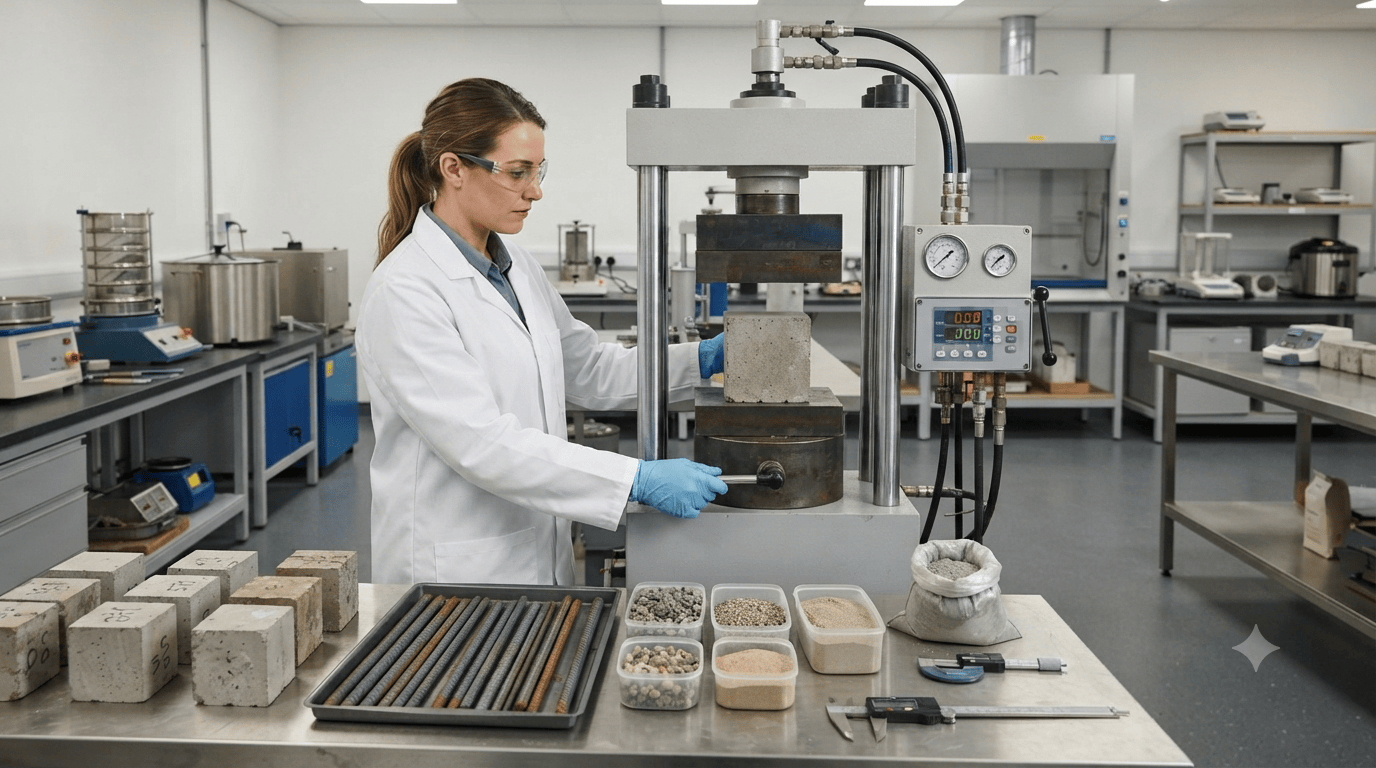
Common assessments include:
- Tensile strength testing to test against pulling forces.
- Testing for ductility by elongation.
- Assessing the material’s ability to withstand surface pressure and permanent deformation.
- Dimensional checks to verify product specifications.
By the proper construction and testing of the material, the company can more accurately determine whether the steel products are suitable for projects.
3. Soil and Aggregate Testing
Soil and aggregates are used for foundation, roads and concrete production. Thus it is necessary to have their properties tested prior to construction.
Typical checks include:
- The particle-size distribution and grading.
- Moisture content assessment.
- Compaction and density testing of soils.
- Strength and durability of aggregates testing.
They can be used to determine inappropriate materials and to facilitate site preparation and construction planning.
Discuss the role of material performance testing.
In addition to routine quality checks, Material Performance Testing involves assessing how materials respond to specific conditions. This is especially relevant where materials are subjected to mechanical forces, environmental conditions or are to be used on numerous occasions.
The tests could evaluate:
- The strength when it is under load.
- Ability to resist impact and deformation.
- Durability under environmental conditions.
- Physical and chemical properties.
- Compliance to the appropriate technical requirements.
In addition, the results provide manufacturers, contractors, and suppliers with an understanding of material limits and allow them to make informed purchasing decisions.
Why Choose METS Laboratories UK?
Construction companies trust testing support and it helps to ensure that they get materials that are reliable. Located in Dudley, METS Laboratories UK offers testing services to different industries for businesses that need assessment and quality testing for their materials.
For businesses, working with a professional testing laboratory can assist them with:
- Test materials properties prior to construction.
- Recognize inconsistencies and areas for quality concerns
- Obtain testing information to support technical decisions.
- Improve material quality-control procedures.
Construct with a sense of confidence using reliable material testing.
Materials play an important part in the beginning of every successful construction project is the selection of materials that are of the appropriate quality and performance. One overlooked material defect can result in expensive rework, project delays and potential long-term structural issues. In a sense, investing in professional construction and material testing is not just a quality-control exercise, but a savvy business move that helps uphold project standards and ensures long-term performance.
By partnering with construction companies, contractors, and suppliers, and utilizing building materials testing and Material Performance Testing, construction organizations can make informed decisions, reinforce quality assurance, and proceed with confidence.
Trust quality of materials with METS Laboratories UK. Contact our team to talk about your testing needs and customized testing solutions for construction materials.
Need to Know
1. How Can I Check Whether Construction Materials Are Suitable for My Project?
Material testing helps evaluate the physical, mechanical and chemical properties of construction materials. Depending on the application, businesses can request concrete strength, steel tensile, soil composition and aggregate grading assessments before approving materials for use.
2. Why Should Construction Companies Test Materials Before Purchasing in Bulk?
Testing representative material samples can help identify quality variations, inconsistencies and potential defects before large quantities are purchased. This supports better supplier evaluation, purchasing decisions and quality control.
3. Which Tests Are Required for Concrete and Cement?
The appropriate tests depend on the material specification and intended application. Common assessments include concrete compressive strength, workability, cement fineness and setting time. These checks help determine whether materials meet the relevant project requirements.
4. Can Material Testing Help Identify Construction Defects?
Yes. Testing can help investigate material-related issues such as low strength, inconsistent composition, poor durability and unexpected performance. Where a defect is suspected, targeted testing and failure analysis can help identify possible causes.
5. When Should Businesses Choose Material Performance Testing?
Material Performance Testing is useful when businesses need to understand how materials respond to loads, impact, stress, environmental exposure or other operating conditions. The testing programme should be selected according to the product’s intended use and performance requirements.
6. How Can METS Laboratories UK Support Construction Businesses?
METS Laboratories UK provides testing services across various industries. Businesses can contact the laboratory to discuss their material type, project requirements and testing objectives. This helps identify suitable testing options and the information needed before submitting samples.
Need Reliable Testing for Your Construction Materials?
Whether you are a construction contractor, building-material manufacturer, supplier or project quality-control professional, selecting appropriate testing services is an important step towards maintaining material quality.
METS Laboratories UK supports businesses seeking testing services to assess material properties and make informed quality-control decisions.