


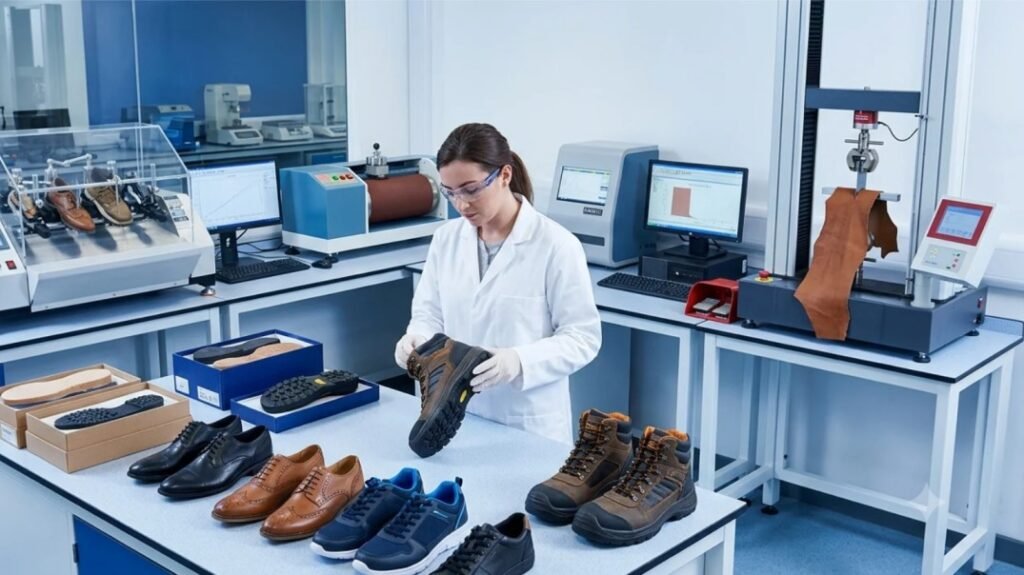
Footwear quality depends on material strength, durability, comfort, and performance under different conditions. Therefore, manufacturers must evaluate leather, synthetic materials, and footwear components to help ensure products meet relevant quality requirements. Footwear testing in UK supports businesses in assessing material characteristics, identifying potential weaknesses, and improving product development decisions. Furthermore, Synthetic Material Testing helps manufacturers understand how different materials perform during use. At METS Laboratories UK, footwear testing supports product evaluation and manufacturing quality control through appropriate assessment methods and relevant testing standards.
Why Is Footwear Testing in UK Important?
Footwear materials experience friction, repeated bending, pressure, and environmental exposure throughout their service life. Consequently, testing helps manufacturers understand material behaviour and assess whether products meet specified requirements.
Key benefits include:
- Material quality assessment: Evaluate leather, synthetic uppers, rubber soles, and other footwear components.
- Durability evaluation: Assess resistance to wear, flexing, and repeated mechanical stress.
- Product development: Identify opportunities to improve materials and footwear construction.
- Manufacturing Quality Control: Support consistency checks across materials and production batches.
- Performance assessment: Obtain useful information about footwear characteristics under defined test conditions.
Moreover, suitable testing can help businesses identify potential issues before products reach the market.
Evaluating Leather and Synthetic Materials
Leather and synthetic materials offer different properties, so manufacturers must select assessment methods according to their footwear applications. Synthetic Material Testing helps evaluate relevant material characteristics, while additional tests assess sole performance and the strength of footwear components.
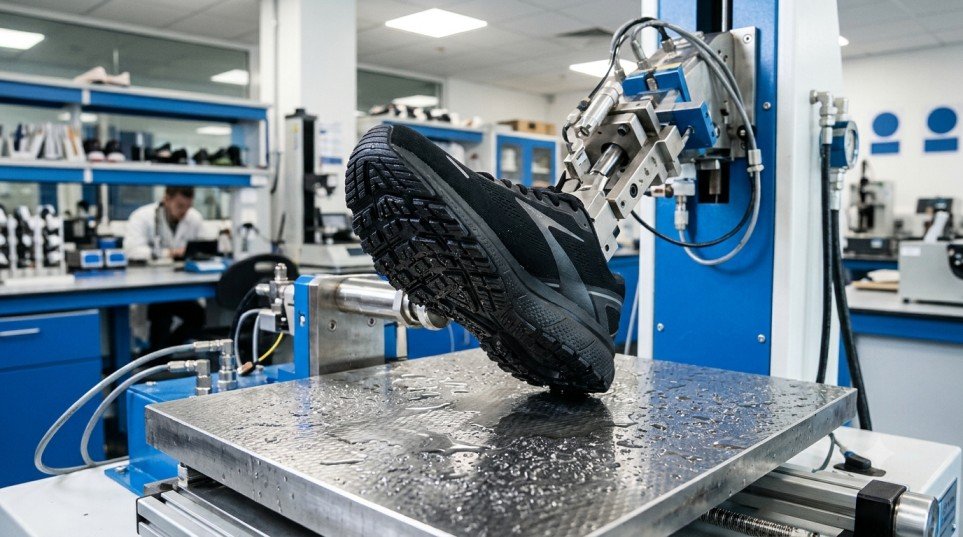
Important assessment areas include:
- Flex resistance: Evaluates how soles or materials respond to repeated bending.
- Abrasion resistance: Assesses resistance to surface wear caused by friction.
- Bond strength: Examines the attachment between footwear components.
- Material strength: Evaluates resistance to specified mechanical forces.
- Antibacterial performance: Assesses antibacterial properties when relevant to the product and testing requirements.
As a result, appropriate testing helps manufacturers compare materials and make informed decisions about product design and quality.
Important Footwear Testing Standards
Reliable Footwear testing in UK requires selecting suitable methods based on the product, component, and intended application. METS Laboratories UK can discuss relevant testing requirements with businesses to help identify appropriate assessment options.
The standards and methods you identified include:
- SATRA TM144: A method associated with evaluating footwear slip resistance.
- ISO 17707: Addresses flex resistance testing of outsoles.
- ISO 16187: Covers antibacterial activity testing for footwear and footwear components.
- ASTM D1052: A test method for assessing the flexing properties of rubber materials.
- EN ISO 20344: Specifies test methods for personal protective equipment footwear.
- BS EN ISO 17708: Addresses adhesion between footwear uppers and outsoles.
- BS EN ISO 20871: Specifies a method for determining outsole abrasion resistance.
These standards address different properties and are not interchangeable. Therefore, the correct edition and applicability should be confirmed for each product and test. In particular, ASTM D1052 should not automatically be described as a sole adhesion test; a suitable adhesion method should be selected for that requirement.
The Role of Slip Resistance Testing
Slip Resistance Testing helps evaluate footwear grip under specified conditions. Since grip can vary with surface type, contamination, and test procedures, selecting an appropriate method is essential.
This testing can help manufacturers:
- Assess outsole grip under defined conditions.
- Compare different sole materials and designs.
- Support product development and performance evaluation.
- Investigate potential slip-related performance concerns.
Furthermore, the results can contribute to product assessment. However, they should be interpreted in the context of the applicable test method and intended footwear use.
How METS Laboratories UK Supports Manufacturing Quality Control
METS Laboratories UK offers textile, footwear, and toy testing services to support businesses evaluating product quality and material characteristics. By identifying testing objectives and relevant standards early, manufacturers can develop a more structured approach to Manufacturing Quality Control.
Businesses should consider their material types, product specifications, intended use, and applicable testing requirements before submitting samples. Subsequently, suitable test results can help inform quality assessment and product development decisions.
Conclusion
Evaluating footwear materials is essential for understanding durability, component strength, and performance. Footwear testing in UK helps businesses assess these characteristics, while Synthetic Material Testing supports informed material selection. In addition, Slip Resistance Testing and other relevant methods contribute to product evaluation and Manufacturing Quality Control.
- Why is footwear testing important?
Ans: Footwear testing helps assess material quality, durability, flexibility, and performance. As a result, manufacturers can identify potential weaknesses, improve product quality, and support effective manufacturing quality control.
- What is slip resistance testing in footwear?
Ans: Slip Resistance Testing evaluates the grip of footwear on specified surfaces under defined conditions. Consequently, it helps manufacturers assess outsole performance and understand how footwear responds to different testing conditions.
- How does footwear testing support manufacturing quality control?
Ans: Footwear testing provides information about material properties, sole durability, and component performance. Therefore, manufacturers can identify potential defects, evaluate production consistency, and make informed quality improvement decisions.
- Where can businesses find footwear testing services in the UK?
Ans: METS Laboratories UK offers textile, footwear, and toy testing services to support businesses in evaluating product quality and material characteristics. Visit https://metslab.uk/textiles-footwear-and-toys-testing to learn more about the available services.