


Complete Guide to HEMA-Free and TPO-Free Nail Polish
Gel nail polish gives a glossy finish that lasts for weeks, so it has become a staple in salons and at home. However, two ingredients in many gel formulas now raise questions. HEMA can trigger skin allergies, and TPO has been banned in cosmetics in the European Union since 1 September 2025. As a result, brands now market HEMA-free and TPO-free nail polish, and buyers want proof that the claim is true. A label alone cannot give that proof, because only laboratory analysis shows what a bottle really contains.
At METS Laboratories, we test nail products for HEMA, TPO and other ingredients, so brands, salons and distributors can back up their free-from claims.
HEMA and TPO in Gel Nail Polish
HEMA and TPO do different jobs in a gel formula, so it helps to know each one:
- HEMA: short for 2-hydroxyethyl methacrylate, a small acrylic building block that helps gel stick to the nail and stay flexible.
- TPO: short for trimethylbenzoyl diphenylphosphine oxide, a photoinitiator that starts the curing reaction under UV or LED light.
- Where they sit: both can appear in gel polish, base coats, top coats and builder gels.
- How the label shows them: look for “HEMA” or “Hydroxyethyl Methacrylate”, and for “Trimethylbenzoyl Diphenylphosphine Oxide” in place of TPO.
What Do the UK Rules Say About 2-hydroxyethyl methacrylate (HEMA) and trimethylbenzoyl diphenylphosphine oxide (TPO)?
The two ingredients face different rules, so keep these dates and conditions in mind:
- TPO, from 15 August 2026: manufacturers and importers can no longer place new TPO-containing cosmetics on the Great Britain market.
- TPO, from 14 February 2027: TPO-containing products can no longer be supplied in Great Britain, so shelf and online stock has to clear.
- TPO in Northern Ireland: the EU ban has applied since 1 September 2025, and Northern Ireland follows EU cosmetics rules.
- HEMA: the UK does not ban it, but nail products with HEMA must be for professional use only.
- HEMA labels: the pack must warn that the product is for professional use only and can cause an allergic reaction.
Why do HEMA-Free and TPO-Free Nail Polish Matter?
Both ingredients matter for health, and they also matter for the market:
- Allergy risk from HEMA: skin contact with uncured gel can cause itching, redness, swelling and peeling around the nails.
- Lasting sensitivity: once a person becomes allergic to HEMA, the allergy usually stays, and it can cause reactions to other acrylates.
- The TPO ban in the EU: regulators classed TPO as toxic to reproduction, and the EU banned it in cosmetics from 1 September 2025.
- Export rules: brands that sell into the EU need a TPO-free formula, so testing becomes part of market access.
- Salon safety: nail technicians handle these products all day, so lower-risk formulas protect them too.
- Trust in claims: shoppers now look for free-from claims, and a test report backs yours up.
As demand for HEMA-free and TPO-free nail polish grows, chemical safety and regulatory compliance have become increasingly important for UK cosmetic brands. Under the UK cosmetics regulatory framework, the Responsible Person is legally accountable for ensuring that cosmetic products placed on the market meet applicable safety and compliance requirements. Cosmetics and nail products in Great Britain are governed by the UK Cosmetics Regulation (EC) No 1223/2009, as retained and amended under the relevant UK legislation, including Schedule 34 of the Product Safety and Metrology framework.
For manufacturers and importers, this means verifying ingredient composition and checking that nail polish formulations comply with the applicable restrictions on substances such as HEMA and TPO before products reach consumers.
Does HEMA-Free Mean Allergy Free?
Not always, and these points show why:
- Other methacrylates: HEMA-free formulas often use a replacement, such as di-HEMA trimethylhexyl dicarbamate, which can also cause allergies in some people.
- TPO-free swaps: TPO-free formulations rely on alternative photoinitiators, such as TPO-L or BAPO, which should also be carefully evaluated.
- Poor curing: a polish that does not cure fully leaves sticky, uncured gel that touches the skin, whatever the formula.
- Label claims: a claim on the bottle is only as good as the test behind it.
Nail Products That Can Contain HEMA and TPO
Any product that cures under a UV or LED lamp may contain them:
- Gel nail polish and hybrid polish
- Base coats and top coats
- Builder gels and hard gels
- Polygel and nail extension gels
- Gel paints for nail art
Who Needs HEMA and TPO Testing?
Anyone who makes, sells or uses gel nail products may need it:
- Nail polish brands and manufacturers
- Private-label and contract manufacturers
- Importers, distributors and retailers who check their suppliers
- Exporters who sell into the EU
- Salon owners who buy in bulk
- Individuals who suspect a product caused a reaction
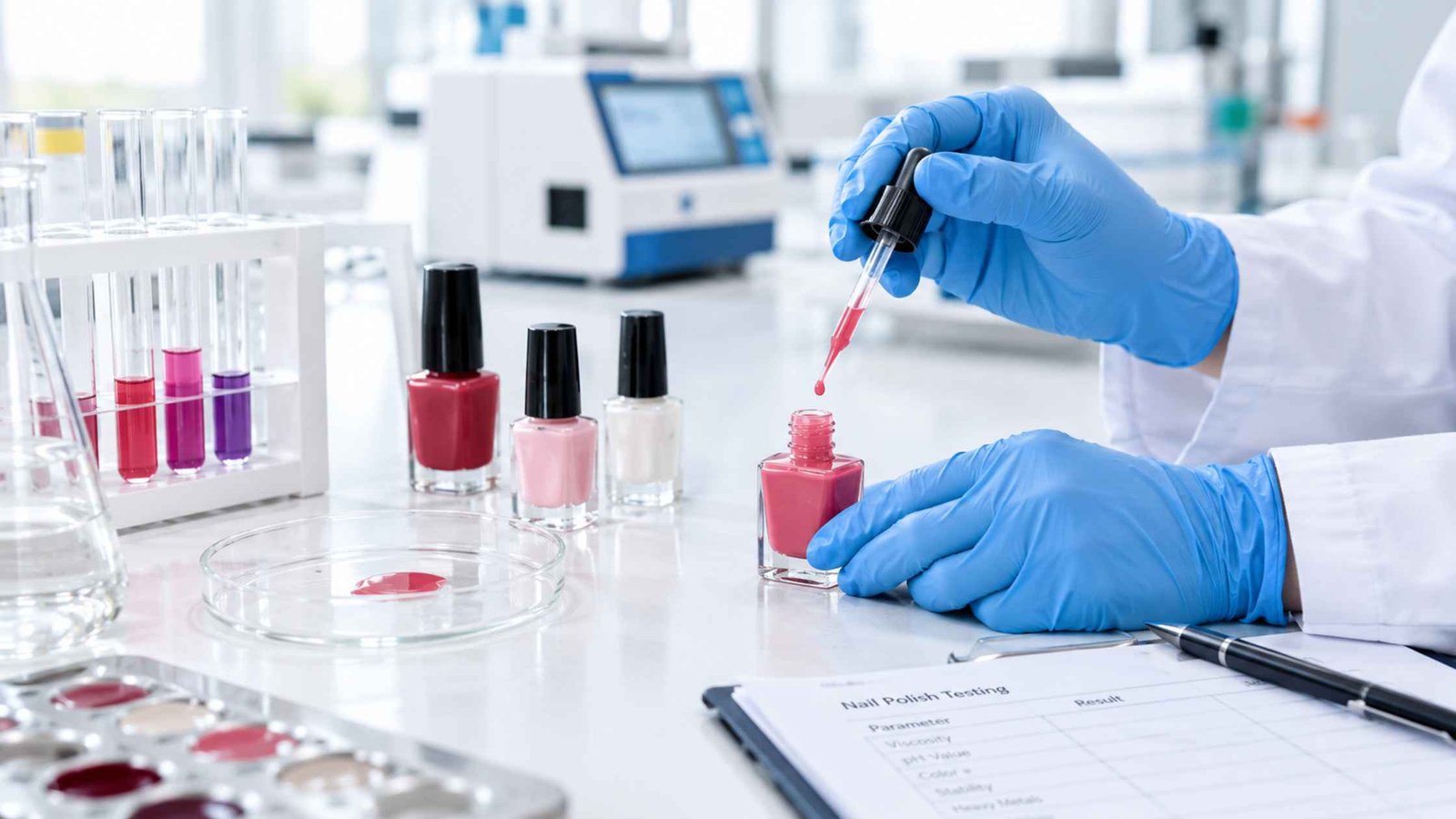
HEMA and TPO Testing Procedure
Laboratory testing follows five steps from sample to report:
- Receive the sample: First, we log the product and record its batch number and storage condition.
- Prepare the sample: Next, we weigh a portion and extract the ingredients with a solvent.
- Separate the ingredients: Then we run the extract through liquid chromatography, which separates HEMA and TPO from the rest of the formula.
- Measure the levels: Later, a detector compares each substance with known standards, so we can report the amount or confirm that nothing appears above the reporting limit.
- Report the result: Finally, we issue a report with the method, the reporting limit and the result for each sample.
What Else Do We Test in Nail Polish?
A free-from claim often covers more than HEMA and TPO, so we also check these areas:
- Other methacrylates: replacement monomers that may also trigger allergy.
- Other photoinitiators: TPO-L, BAPO and similar substitutes.
- The toxic trio: toluene, formaldehyde and dibutyl phthalate, which many “3-free” claims name.
- Heavy metals: lead, arsenic, cadmium and mercury from pigments and colourants.
Choosing HEMA-free and TPO-free Nail Polish
These checks help you pick a safer gel polish, whether you are a brand, a salon or a shopper:
- Read the ingredient list: look for HEMA, hydroxyethyl methacrylate and trimethylbenzoyl diphenylphosphine oxide.
- Ask for a test report: a supplier who tests should show the result for the exact batch.
- Check the replacements: ask which monomers and photoinitiators the formula uses instead.
- Match the lamp: use the lamp the brand recommends, so the gel cures fully.
- Keep gel off the skin: apply it with care, avoid the cuticle and wipe up spills before curing.
- Stop if you react: itching or swelling around the nails is a reason to stop and see a doctor.
METS Laboratories for HEMA and TPO Testing in Nail Polish
We build our nail polish testing around the claims brands actually make:
- Targeted analysis: we measure HEMA and TPO by liquid chromatography, so the result shows the actual level.
- Replacement ingredients: we also check the substitutes that free-from formulas use.
- Free-from claim checks: we test the full set of claims on your label, such as 3-free or 10-free.
- Reports for market access: our reports support the documents that buyers, distributors and exporters ask for.
Conclusion
HEMA and TPO have changed what buyers expect from gel nail polish, and a free-from claim now needs proof. So before you launch, relabel or import a gel product, test the exact batch and check what replaces each ingredient. Then contact METS Laboratories, and we will advise on the tests that match your claim and your market.
Frequently Asked Questions
1. What does HEMA free nail polish mean?
Ans: It means the formula contains no 2-hydroxyethyl methacrylate. However, it may still contain other methacrylates, so HEMA-free does not guarantee allergy-free.
2. Why is TPO banned in gel nail polish?
Ans: EU regulators classed TPO as toxic to reproduction, so they banned it in cosmetics from 1 September 2025. The ban applies in the EU, while rules in other countries differ, so check your own market.
3. Can a lab test nail polish for HEMA and TPO?
Ans: Yes. A lab extracts the ingredients, measures them by liquid chromatography, and then reports each level or confirms that none appears above the reporting limit.