


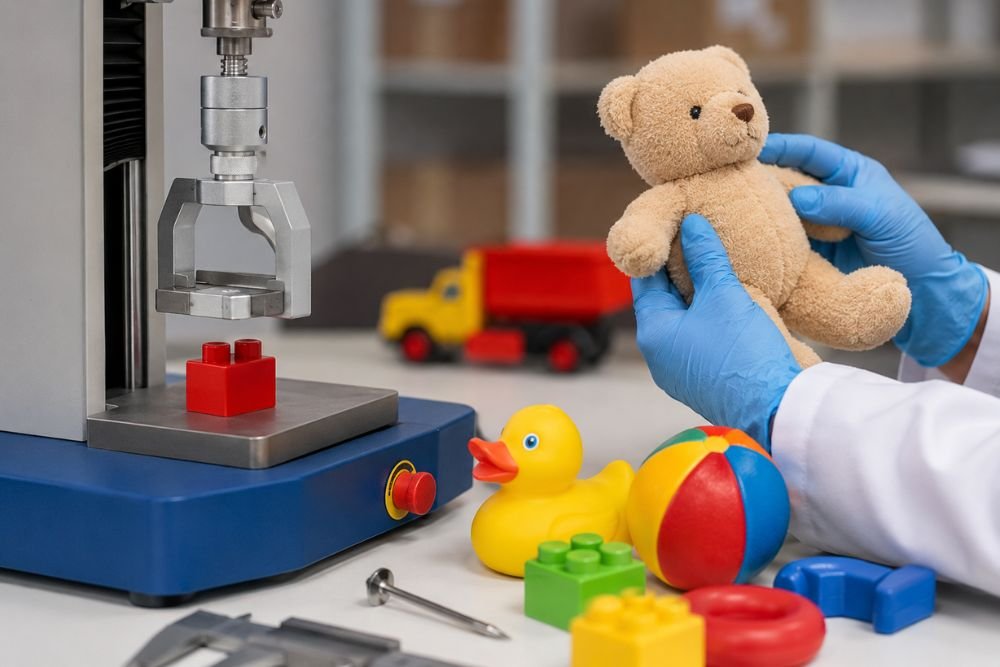
Before a toy reaches shelves or online marketplaces, manufacturers and importers need confidence that it is safe, compliant, and ready for the intended age group. A Toy Testing Laboratory UK identifies mechanical, chemical, flammability, and electrical risks before a product reaches children. Toy Compliance Testing can also help manufacturers and importers demonstrate that their products meet the requirements of their intended market.
For manufacturers, testing is not simply a final quality check. It is an important part of product development, risk management, and market readiness.
What Does Toy Testing Reveal Before Launch?
A product may look safe during normal use but still contain hazards that are not immediately visible. A Toy Testing Laboratory examines the toy against applicable safety requirements and test methods to identify these risks.
Depending on the product, testing can assess:
- Small parts and choking hazards
- Sharp points and accessible sharp edges
- Mechanical strength and durability
- Flammability
- Migration of certain chemical elements
- Electrical safety
- Materials and surface coatings
- Age-related safety requirements
- Functional and foreseeable-use risks
These assessments help manufacturers understand whether a toy can withstand the conditions it may experience during play.
EN 71 Toy Testing UK: What Is Checked?
EN 71 Toy Testing is particularly important for toys placed on the European market, with relevant EN 71 requirements also forming part of UK toy safety compliance considerations depending on the product and market.
A Toy Testing Laboratory in UK may assess applicable parts of the EN 71 series, including:
EN 71-1 – Mechanical and Physical Properties
This area focuses on hazards such as sharp edges, sharp points, small parts, accessibility, structural integrity, and other mechanical risks.
EN 71-2 – Flammability
Toys and materials can be assessed for their behaviour when exposed to ignition sources. This is particularly relevant to products containing textiles, costumes, soft materials, or other potentially flammable components.
EN 71-3 – Migration of Certain Elements
Materials used in toys can be tested for the migration of specified elements. This is important where children may handle, mouth, or come into contact with toy materials.
EN 71-13 – Olfactory Board Games, Cosmetic Kits and Gustative Games
Certain specialised toys can require additional requirements under EN 71-13, particularly products involving cosmetic, sensory, or food-like play experiences.
Using a Toy Testing Laboratory with appropriate testing capabilities helps businesses determine which requirements apply to their particular toy.
Beyond EN 71: Other Toy Safety Standards
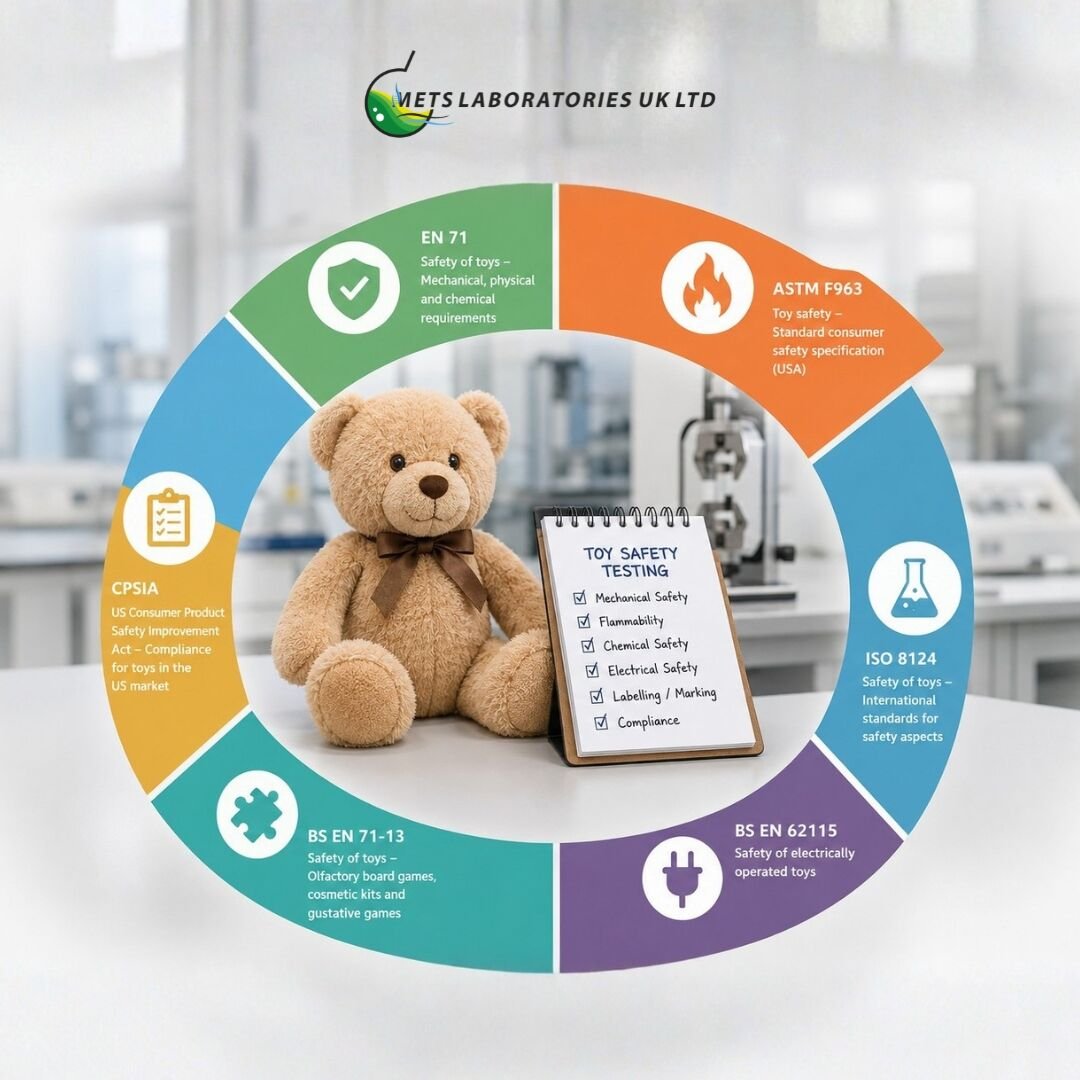
Toy manufacturers selling across different markets may need to consider more than one regulatory framework. The standards and regulations shown in the supplied testing reference include:
- ASTM F963 – Toy safety requirements for the US market
- ISO 8124 – International toy safety standards
- CPSIA – US consumer product safety requirements
- BS EN 62115 – Safety requirements for electrically operated toys
- EN 71 series – European toy safety requirements
The correct requirements depend on the toy type, materials, intended age group, design, and destination market. Toy Testing Laboratory helps businesses identify the relevant testing scope rather than applying unnecessary tests.
Why Toy Safety Testing UK Matters Before Launch
Waiting until a toy is already on the market to discover a safety problem can lead to delays, rejected shipments, customer complaints, recalls, or reputational damage.
Toy Safety Testing provides an opportunity to identify problems while changes can still be made. For example, testing may reveal that a component becomes detached under mechanical stress, a material exceeds an applicable chemical limit, or an electrical toy does not meet the required safety criteria.
Early assessment allows manufacturers to modify materials, components, construction, labelling, or design before full-scale production.
Toy Compliance Testing UK for Market Readiness
Toy Compliance Testing supports businesses in demonstrating that their products have been assessed against relevant safety requirements. Test results can provide valuable technical evidence for manufacturers, importers, retailers, and other businesses involved in placing toys on the market.
A Toy Testing Laboratory helps businesses understand whether a toy requires mechanical, chemical, flammability, electrical, or combined testing.
This is especially important for products that combine multiple functions. An electrically operated toy, for example, may require consideration of both general toy safety requirements and electrical safety requirements under BS EN 62115.
What Should Manufacturers Test Before Production?
A practical testing process should begin before mass production. Businesses should consider:
- Product classification – Identify the toy category and intended age group.
- Material review – Assess plastics, paints, coatings, textiles, metals, and other materials.
- Risk assessment – Identify foreseeable hazards during normal and reasonably foreseeable use.
- Applicable standards – Determine the relevant EN, BS EN, ISO, ASTM, or regulatory requirements.
- Laboratory testing – Submit representative samples for the required assessments.
- Corrective action – Address failures before production or market launch.
- Documentation – Maintain appropriate technical and compliance records.
Working with a Toy Testing Laboratory at an early stage can make this process more efficient and reduce the risk of costly changes later.
Choose METS Laboratories UK for Toy Testing
METS Laboratories UK Ltd provides testing services to help manufacturers, importers, and suppliers evaluate product safety and compliance requirements. Located in Dudley, UK, the laboratory supports testing across a wide range of industries.
For businesses preparing toys for the market, Toy Safety Testing in UK can help identify potential hazards and provide valuable test evidence before a product reaches consumers.
Whether you are developing a new toy, modifying an existing design, or entering a new market, selecting the right testing programme at an early stage can help reduce delays, minimise compliance risks, and support a smoother product launch.
Conclusion
A toy may appear safe during everyday inspection, yet laboratory assessment can reveal risks that are difficult to identify otherwise. Testing before launch gives manufacturers the opportunity to correct problems, review materials, and strengthen their compliance process before products reach consumers.
For businesses preparing products for the UK or international markets, working with a Toy Testing Laboratory in UK can provide the technical assessment needed to make informed decisions and support a safer market launch.