



In the contemporary global market, the process of a product going through the idea to the hands of a consumer is a complicated one. Before any product can enter the shelves of a retailer in the UK or be sold to a customer in the UK through the Internet, it has to go through a series of hard tests and assessments.
This is a significant process that is also called product testing. Understanding how to conduct product testing successfully is not just a box to fill but one of the pillars of a company’s or brand’s success in a new market and a key factor in ensuring consumer security for importers and distributors, especially those operating in the dynamic UK market.
What is Product Testing?
Fundamentally, product testing is a methodical process of assessing a product to achieve the pre-established standards of quality, safety, performance and reliability. It is an inevitable component of the life cycle of product development, which seeks to correct any flaws or defects before they can harm a user or affect the reputation of an organization.
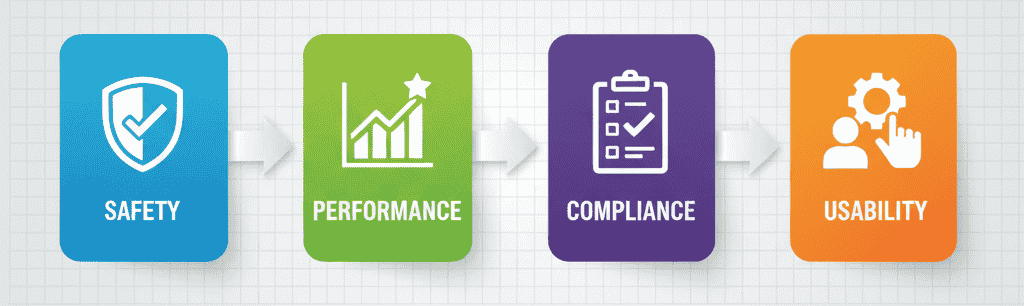
Product testing is a multidimensional and extensive task. It may have a very broad selection of evaluations that are specific to the product, including:
- Safety Testing: This is arguably the most critical aspect, ensuring a product poses no risk to the user. For a toy, this might mean checking for choking hazards. In the case of an electronic device, it includes electrical safety, fire and electromagnetic compatibility tests.
- Performance and Durability Testing: This is applicable to determine the capability of a product to perform its intended use and how the product can survive wear and tear. To take an example, the life of a smartphone battery or the power of a vacuum cleaner.
- Compliance Testing: Companies can use this to check whether a product meets all applicable industry and government standards. This becomes especially crucial when making sales in the UK, where they must satisfy legal requirements.
- Usability Testing: Usability testing focuses on the end-user experience and therefore ensures that a product is intuitive, user-friendly, and aligned with consumer expectations.
This is aimed at giving an all round description of the product and its market preparedness. In this way, the companies will be able to provide products that not only match, but also surpass, the expectations of consumers, which will build trust and the loyalty to the brand in the long term.
The Indispensable Role of Product Testing in the UK Market
The UK has one of the most developed and consumer-centric markets in the world, underpinned by strict regulations and high consumer expectations. For any business, whether domestic or international, aiming to succeed here, product testing in the UK is non-negotiable.
One of the primary reasons for its importance is consumer protection. The UK’s Office for Product Safety and Standards (OPSS) and other regulatory bodies enforce a robust legal framework to ensure that goods placed on the market are safe. Without proper testing, a product could fail in a way that causes injury, leading to significant legal liability, costly product recalls, and severe reputational damage.
Moreover, a competitive advantage may be a well-done product testing strategy. A brand that promises quality and safety is unique in a market that is full of options. The British customers are becoming highly demanding and prefer products that are of good quality, durable, and reliable. Extensive testing in an accredited laboratory evidences this and assures the customer of the product. This is especially in the case of such sectors as electronics, consumer goods, and medical devices where safety and performance are the key factors.
In the case of new products, testing plays a very important role in the detection and correction of design flaws in the early stages of the development process. The proactive method saves time and money and eliminates the need to re-engineer or issue expensive recalls once the product has already been released. Through a reliable UK product testing laboratory, businesses can have their products ready to go to the market on the first day without delays and achieve a smooth entry into one of the most powerful markets in Europe.
CE Certification- A Cornerstone of UK and European Trade
When discussing product safety and compliance, it is impossible to ignore the significance of CE certification. The letters “CE” are an abbreviation of the French phrase “Conformité Européenne“, meaning “European Conformity“. This marking is a declaration by the manufacturer that the product meets the essential health, safety, and environmental protection requirements of the relevant European directives and regulations.
The CE mark applies to a broad category of products sold in the European Economic Area (EEA), such as toys, machinery, electronics, and medical devices. Although the UK is no longer a member of the European Union, British businesses still widely use the CE mark.
- In the case of the EU market: Any UK company that wants to export to the EU still has to follow CE marking requirements. This will guarantee smooth entry into a huge and profitable market of more than 450 million consumers.
- In the case of the UK market: After Brexit, the UK implemented the UKCA (UK Conformity Assessed) marking. Nevertheless, in a practical gesture to reduce the pressure on the businesses, the UK government has massively lifted the identification of the CE marking of numerous products introduced in the Great Britain market. This dual-marking concession implies that in most products, CE certification remains an important standard to manufacturers and importers in the UK. The same set of compliance procedures streamlines the operations of firms selling to both the EU and UK markets in many cases.
How to achieve the CE certification
To achieve the CE certification, companies may take several steps such as locating the concerned directives, evaluating the product conformance, preparing a technical file, and issuing a Declaration of Conformity. This is a self-proclaiming exercise supported by rigorous testing and is an important element of proving compliance and entry into the market.
A UK business may find it difficult to manoeuvre through the challenges of CE and UKCA marking. This is where a professional laboratory such as METS Lab will prove to be a highly valuable ally in that they can offer the expertise and testing facilities to ensure that not only will the local and international sales be in compliance but that they will also remain in compliance.
Choosing the Right Partner: METS Lab UK
The best method of negotiating this complex-looking environment is that the company works with a reputed and accredited product testing laboratory especially where the businesses are located in the UK. The knowledge and capability required to require products to be safe, compliant and saleable would be available within laboratories such as METS Lab UK, which carries out a comprehensive range of consumer product testing in the UK.
From testing household items and personal care products to ensuring the safety of toys and the performance of electronics, a specialised lab can provide the accurate and reliable results that brands need. They help with everything from initial design-for-compliance reviews to full-scale testing and report generation, ensuring that all necessary steps for product testing in the UK are followed correctly.
Conclusion
Finally, product testing in the UK is a multi-faceted, effective process which forms the basis of product safety, quality and market success. Through the adoption of stringent testing and the need to learn the ins and outs of the CE and the UKCA marking systems, businesses will be able not only to safeguard their brand and consumers but also to establish a basis to continue growing and be profitable in one of the most competitive markets in the world. Any company dedicated to quality makes a prudent decision by collaborating with a reputable lab.