


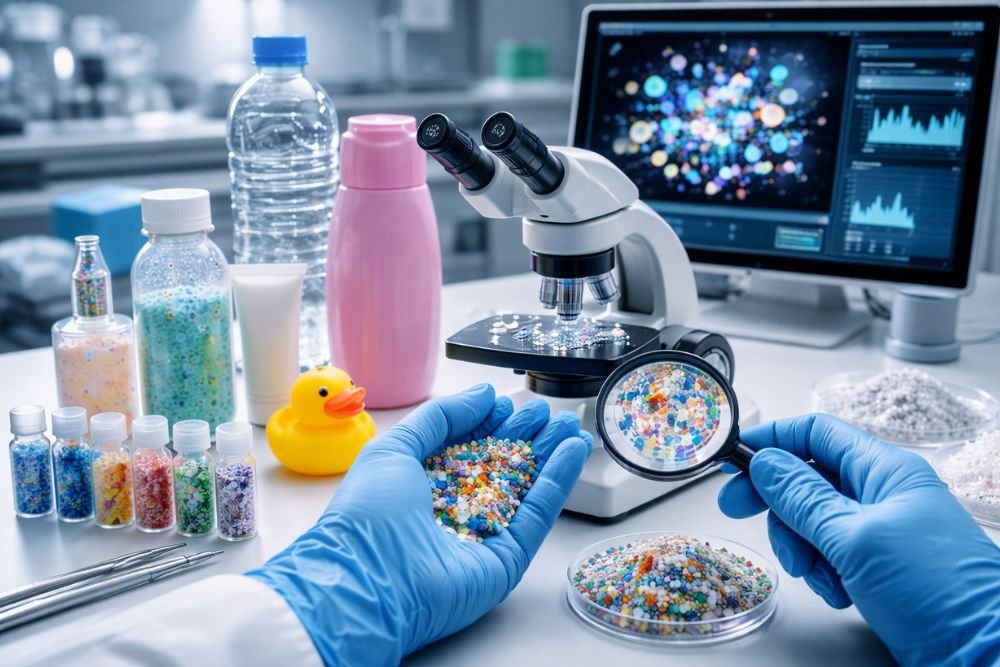
Microplastics have become a major issue in consumer products all over the world and are subject to growing questioning in the UK. These microscopic plastic particles are usually smaller than 5mm in size, and can be found in products such as cosmetics and packaging materials. Authorities are increasing the focus of control over these contaminants to ensure the safety of the people and the environment. Businesses are therefore investing in advanced testing protocols at a plastic testing lab to ensure compliance and mitigate risks effectively.
Specialized plastic testing labs provide precise analytical capabilities, supporting regulatory compliance and enhancing product safety initiatives for a wide range of consumer products.
Understanding Microplastics in Consumer Products
Microplastics may find their way into consumer products in several ways such as textiles, packaging and industrial by-products in the form of synthetic fibers. Environmental agencies such as DEFRA and the Environment Agency in the UK have been concerned about the effects of microplastic contamination on the environment and human health. According to surveys, more than 60 percent of consumers in the UK are also concerned about the fact that products of the personal care and household categories contain microplastics.
In addition to consumer perception, scientific evidence indicates that microplastics can be stored in the water systems, soil, and food chains. This is where strict testing and validation is significant and at a plastic testing lab.
Regulatory Landscape in the UK
The United Kingdom has come up with full regulations to deal with microplastics in consumer goods. UK REACH requires the evaluation of chemical and polymer contents in order to be safe. Furthermore, the Marine Strategy Framework Directive guidance promotes industries to reduce the release of microplastic into the water body.
Firms aiming at compliance are beginning to use product testing in UK laboratories to determine acceptable microplastic levels. Regulators are entitled to evidence through the testing outcomes in which the results show the compliance with the safety standards and the environmental one.
Analytical Techniques for Microplastic Detection
State-of-the-art laboratories use various ways of analysis to identify and describe microplastics. Fourier Transform Infrared Spectroscopy (FTIR), Raman spectroscopy, and thermal analysis are techniques that can be used to accurately establish the size, morphology, and composition of a polymer.
A plastic testing lab offers measurable data that supports the choice of materials, process modifications, and mitigation of risks. These services play a vital role in upkeep and observance of standards as well as provision of consumer products to conform to the regulations.
Impact on Consumer Safety
Researchers suggest that microplastics may harm health when people consume them or when the skin absorbs them through epidermal exposure, especially from cosmetic products and food wrappings. Continuous studies posit the possibility of chemical leaching and cumulative effects of the chemicals in human beings. Consequently, manufacturers must prioritize microplastic testing at plastic testing labs as part of risk management.
By introducing the analysis of microplastic as a part of the lifecycle of consumer products, it becomes possible to detect hazards at early stages, minimizing the chances of a recall or a regulatory problem. This will enhance consumer confidence and foster transparency and safety.
Case Studies and Industry Responses
Some brands based in the UK have taken the initiative to deal with the microplastic issue. As a reaction to the plastic microbeads, cosmetic companies have reformulated exfoliants and scrubs to eliminate them. Manufacturers of packaging are producing polymers that minimise the shedding of particles during use and disposal.
It is a similar trend among international corporations that are focusing on the significance of sustainable manufacturing. Working with a qualified plastic testing lab would help keep consumer products up to international standards and secure in the markets.
Integrating Testing into Compliance Programs
Microplastic testing is to be included in the larger product testing in UK compliance and quality assurance strategies. Effective programs are based on routine sampling, lab analysis and regulatory reporting. Advanced testing schedules give action-driven information to streamline materials, design, and processes.
Microplastic testing data would complement sustainability reporting, as companies can monitor the decline rates by product lines. The strategy helps in environmental stewardship and serves to address increasing regulatory obstacles to product testing in UK manufacturers conducting business internationally.
Emerging Trends in Microplastic Testing
The microplastic testing industry is advancing with new and more efficient and accurate testing methods. Machine learning algorithms, high-resolution spectroscopy, and automated imaging systems are the new standards within the top plastic testing labs.
Such technologies allow manufacturers to identify trace microplastics, which guarantee a full risk management. Future-proof consumer products safety strategies are emerging as a trend towards predictive testing and proactive compliance.
Global Perspective and UK Leadership
Although microplastics are an issue worldwide, the UK has come up with stringent testing and compliance measures. The cooperation among regulators, industry bodies, and laboratories is developing powerful structures to assess the microplastic content in consumer products.
Global brands that enter the UK market, have to meet these standards and collaborating with certified plastic testing labs is critical to comply and be sustainable.
The testing of microplastics at the advanced stage is essential when it comes to consumer safety, ecology, and regulation. Partnering with a plastic testing lab enables companies to monitor risks effectively and adhere to UK and international standards.
METS Lab UK offers full service in multiple consumer products testing so that manufacturers can adopt strict compliance strategies. The inclusion of advanced testing in product development and lifecycle management facilitates confidence by consumers in the market, minimized environmental effects and sustainable operations. For more information or consultation, contact METS Lab UK.