


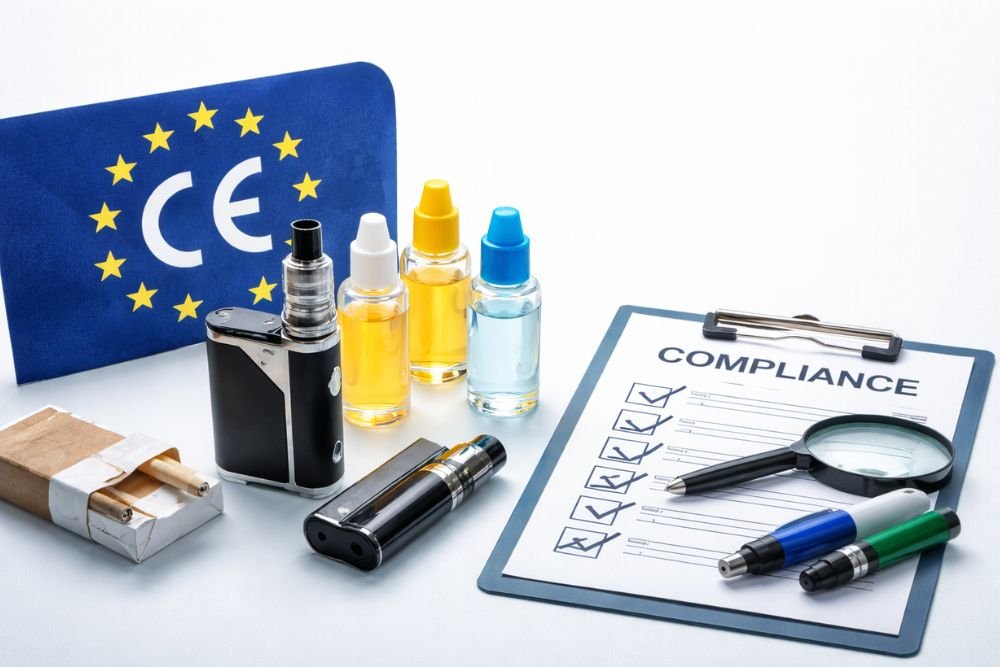
In the current integrated markets, product compliance is a core issue among manufacturers, importers and distributors of consumer goods. CE marking of the European Union and the Tobacco Products Directive (TPD) are two essential schemes that tend to overlap particularly in companies dealing with electronic cigarettes, vaping products and other regulated consumer products. Walking these compliance roads at once is not merely a compliance requirement–it is a business and strategic one, which determines access to markets, reputation, and business survival in the UK and other markets.
This case study examines how companies can successfully achieve both CE marking and TPD compliance, the realities involved in the process, and ways of doing it, with a focus on what is going on in the UK, and the implications in global markets. To get specific compliance assistance, an organization may refer to professional testing and certification laboratories ones with profound knowledge of regional business conditions within the UK like us.
Understanding CE Marking and TPD Compliance
The CE marking is a travelling permit of goods that are placed on the markets of the EU and UK which means that the good adheres to all the requirements of the directives on health, safety, and environmental protection. It is obligatory to a great range of consumer goods, including toys and electronic devices. Conversely, the TPD presents certain standards on tobacco products and other products connected with tobacco such as e-cigarettes, such as disclosure of ingredients, testing of emissions, packaging, and advertising prohibition.
Dual Compliance in Practice
Both CE marking and TPD compliance pose a multilayered challenge to comply. As an illustration, a vaping device should not only prove to be electronically safe in accordance with the rules of a CE marking, but it must also comply with strict e-liquid composition and labelling criteria established by the TPD. Practically, it may be initiated through a thorough product analysis to trace all the concerned instructions and standards including the Low Voltage Directive and Electromagnetic Compatibility Directive that are usually imposed on electronics. Subsequently, the companies will need to harmonize their technical documenting and testing strategies so that all the pertinent TPD requirements could be verified independently.
The UK manufacturers and distributors frequently cooperate with certified laboratories in order to facilitate the compliance process. An example is the local case studies of 2024 which indicated that approximately 70 percent of the e-cigarette brands new to the UK market had made initial gap assessments to detect overlapping needs, and avoid duplication of testing. Such attempts are not just bureaucratic, but these are essential to ensure the consistency of product quality and preserving the health of the population. To find out more information concerning the technical assessment processes and laboratory services in the UK, visit our about page.
Key Challenges in Navigating Both Frameworks
Documentation control is still on the list of priorities of organizations that are aiming at dual compliance. As both CE and TPD have specific requirements in detail on the technical files, the issue of data integrity and traceability is critical. The manufacturers need to maintain current documentation such as:
- Construction files to CE marking requirements
- Ingredient lists to TPD compliance requirements
- Risk analysis reports and test results
- Safety data sheets and product labels
The other major problem is the changing nature of the two regulatory regimes. In 2024, the UK tightened its regulation regarding products and services that do not meet compliance with the regulation (vaping products), leading to the withdrawal of many successful devices. A large number of these problems arose not because of hardware deficiencies but due to errors in the process of submitting TPDs, including incomplete submissions to regulatory bodies or lack of submissions of emission tests. Local compliance partners and testing labs can facilitate this by staying aware of regulatory changes and assisting companies in amending documentation on time.
Moreover, the small and medium-sized enterprises (SME) usually have fewer resources to cope with two sets of regulations. Strategies that can work include:
- Educating the internal teams about the basics of compliance
- Making use of the local networks as a source of mutual advice and best practices
- Contracting accredited consultants for technical support
A survey commissioned in the UK revealed that SMEs who contracted accredited consultants had higher chances of making their market entry on time.
In order to ask questions or to be in touch with the experienced compliance professionals, we have a contact page.
Streamlining Dual Compliance: Effective Approaches
Companies which are only able to align CE marking with TPD compliance usually embrace several best practices:
- Early Integration: Start compliance planning during product design, all the necessary directives and standards, and it is essential to think about dual compliance as one integrated process.
- Carry out Fully Risk Evaluation: Evaluate all the possible risks, including electric safety and toxicological effects as well as both sets of requirements must be considered.
- Utilize Accredited Labs: Ensure that reputable and accredited laboratories fulfill all testing requirements so regulators accept the results in both CE and TPD contexts.
- Keep Your Records in one place: Store all the files in digital form and in compliance management systems that are cloud-based to make updates and audits easier.
- Continuous Monitoring: Keep up with new regulatory changes and change the policies and product specifications on the fly.
An example of the effect of such practices is an example in the UK, where in 2023 an electronics company introduced a new form of vape pen, but used an integrated compliance management system. It shortened its average time-to-market by 30 percent over its competitors who had to use traditional, and sequential compliance checks.
To get an overview of the known testing capabilities, look at accreditations of our company.
Global Perspectives on Compliance
Although the case study focuses on the specifics of the region in the UK, the lessons can be heard by the global players. The shifts toward establishing similar standards of the products and raising the level of transparency are international. Similar issues like management of technical documentation, involvement of regulators, etc. cut across borders and therefore international benchmarking is an appealing practice
Combining CE marking and TPD compliance is a growing trend and situation that is increasingly becoming an order of the day in consumer product businesses today particularly with the healthy growth in the vaping and electronic devices sectors. Dual compliance would be impossible without extensive planning, documentation, sustained monitoring, and adherence to best practices in product design to market introduction. Through conforming to accredited, regionally experienced partners, like those offered in the UK, the organizations are able to adequately pass regulation expectation, safeguard the consumer safety, as well as remain competitively fast-to-market. It is a proactive, balanced approach that is both regulatory but also organizational resilience amidst the volatility of the current global marketplace. To recap it all, the art of steering through CE and TPD compliance is not only about checking regulatory boxes–it is a key to sustainable product innovation and success by companies, like METS Lab UK.